
What is IPFS?
IPFS, short for InterPlanetary File System, is a decentralized file storage and sharing system. Unlike the traditional web that relies on location-based addressing (e.g., URLs like www.example.com), IPFS uses content-based addressing. Files are identified by their content rather than their location, making the system more resilient and efficient.
How Does IPFS Work?
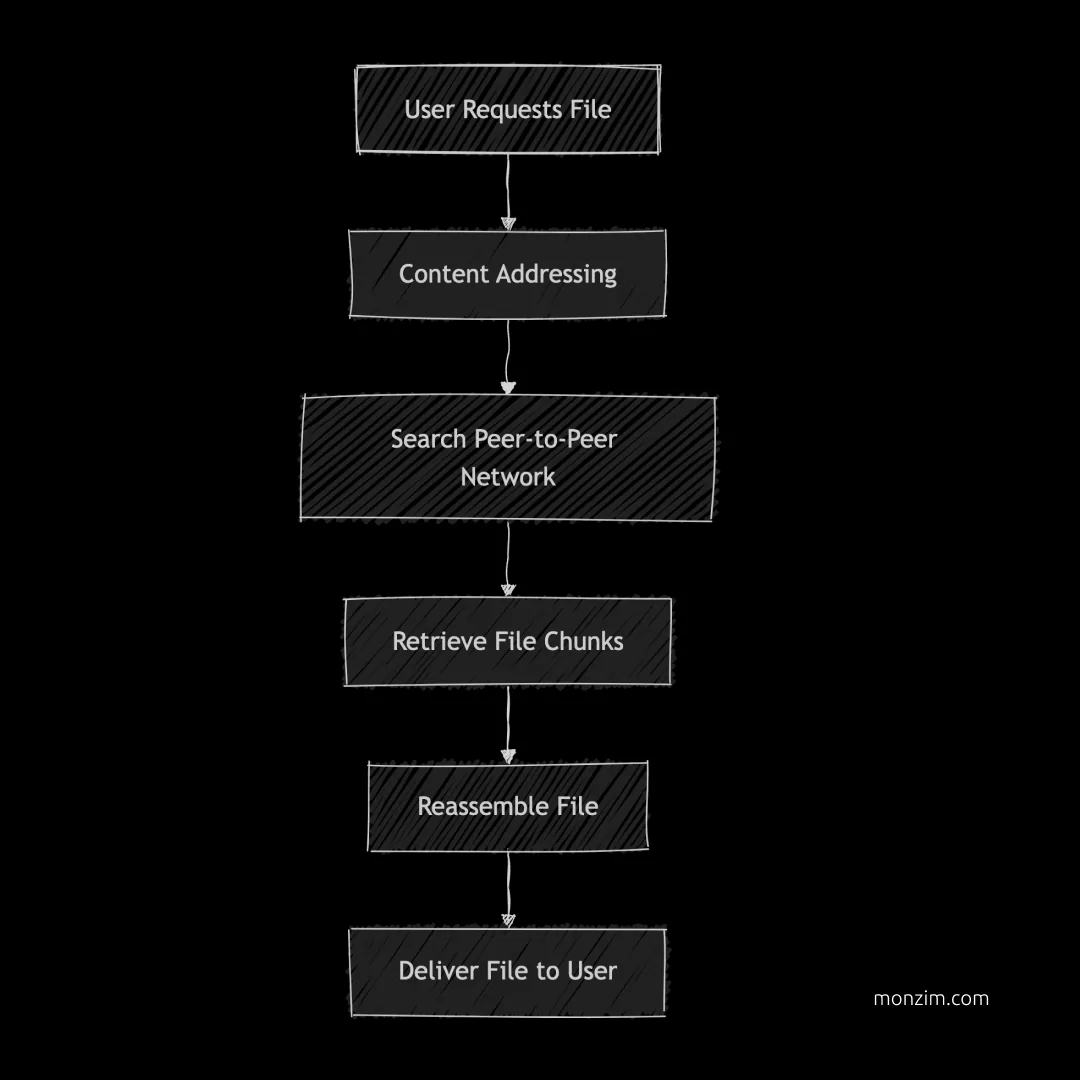
IPFS operates by breaking files into smaller chunks, assigning each chunk a unique cryptographic hash, and distributing these chunks across a peer-to-peer network. Here's how it works:
- Content Hashing: Each file is split into chunks, and each chunk gets a unique hash.
- Peer-to-Peer Network: Files are distributed across nodes in the network. Every node can store and share chunks.
- Content Addressing: When a user requests a file, the network retrieves it using its hash.
- Versioning: Files can be updated, and IPFS retains previous versions for reference.
What Are the Benefits of IPFS?
- Decentralization: Eliminates single points of failure.
- Content Integrity: Cryptographic hashing ensures data authenticity.
- Efficiency: Files can be retrieved from the nearest node, reducing latency.
- Cost-Effective: Shared storage across nodes lowers costs.
- Offline Availability: Data can persist even if the original source goes offline.
What Are the Drawbacks of IPFS?
- Storage Duplication: Files need to be hosted by nodes, leading to possible duplication.
- Network Performance: Can be slower than centralized systems under certain conditions.
- Adoption Challenges: Requires widespread adoption to realize its full potential.
- Security Concerns: Decentralization may lead to unregulated content sharing.
How Does IPFS Compare to Other Distributed File Systems?
| Feature | IPFS | Hadoop DFS | Ceph |
|---|---|---|---|
| Decentralization | Fully Decentralized | Centralized Management | Centralized Management |
| Content Addressing | Yes | No | No |
| Fault Tolerance | High | High | High |
| Use Cases | General | Big Data | Cloud Storage |
How Does IPFS Compare to Other Decentralized Storage Systems?
| Feature | IPFS | Filecoin | Storj |
|---|---|---|---|
| Payment Model | Free | Paid | Paid |
| Focus Area | File Sharing | Storage Economy | Scalable Storage |
| Decentralization | Yes | Yes | Yes |
What Are the Limitations of IPFS?
- Data Persistence: Files can disappear if no node pins them.
- Scalability: Large-scale usage might face bottlenecks.
- Regulation: Lack of control could lead to misuse.
What Are the Use Cases of IPFS?
- Decentralized Websites: Hosting websites without central servers.
- Data Archiving: Reliable, tamper-proof storage for historical data.
- Media Distribution: Efficient content sharing (e.g., videos, images).
- Blockchain Integration: Storing data off-chain for decentralized applications (dApps).
How to Use IPFS?
- Install IPFS: Download and install the IPFS CLI or GUI from the official website.
- Initialize IPFS: Run
ipfs initto set up your node. - Add Files: Use
ipfs add <file>to add files to the network. - Retrieve Files: Fetch files using their content hash with
ipfs cat <hash>. - Explore: Use the IPFS gateway (https://ipfs.io) to browse content.
Running IPFS on Your Local Machine using Docker
To run IPFS on your local machine using Docker, using the implementation provided by Kubo. (An IPFS implementation in Go). It have a gui interface to interact with the IPFS node.
docker pull ipfs/kubo:latest
docker run --rm -it --net=host ipfs/kubo:latest
Make sure to have Docker installed on your machine before running the above commands. Access the IPFS GUI interface by visiting http://localhost:5001/webui in your browser.
What Are the Alternatives to IPFS?
- Filecoin: Incentivized storage marketplace built on IPFS.
- Storj: Decentralized cloud storage.
- Sia: Blockchain-based storage solution.
- Arweave: Focused on permanent data storage.
What Are the Future Prospects of IPFS?
IPFS has the potential to revolutionize how we share and store data. Its integration with Web3 technologies and decentralized applications (dApps) opens new avenues for innovation. As adoption grows, IPFS could become a backbone for a decentralized internet.
What Are the Challenges of IPFS?
- Mass Adoption: Requires broader acceptance for optimal utility.
- Data Regulation: Managing illegal or harmful content in a decentralized system.
- Performance: Ensuring speed and reliability at scale.
IPFS is a transformative technology with immense potential for decentralizing the internet. While it has challenges to overcome, its innovative approach to file sharing and storage makes it a key player in the evolution of digital infrastructure. Whether you're building dApps or exploring Web3, IPFS is worth a closer look.